Friday, December 4, 2009

About Body Piercing

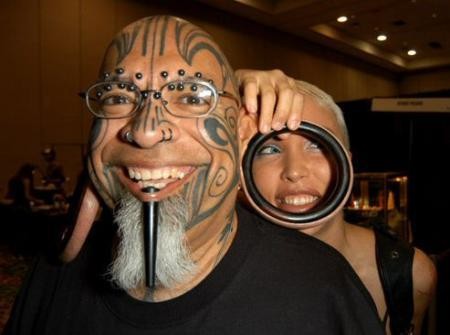
If you know your world history, you will see that Egyptians, Greeks, and Romans have all practiced body art such as piercing and tattooing. However, not all of those civilizations pierced their bodies for the same reasons. The reasons for body piercing in the old days may vary from body decoration (to show the role or rank of a person in the society) to protection against evil. In our present society, on the other hand, we now know more about the risks of body piercing. Punching a hole in your body is a serious decision. So, before you decide to drill a hole in your tongue or nipples or, worse, your genitals, ask your friends and family what they think.

If you have decided to have your body pierced, please do not do it yourself. Do not even ask a friend to do it. Body piercing is a delicate job that needs to be done by professionals. Most of all, do not get a body piercing for all the wrong reasons. Always remember that you do not have to have your body pierced just to belong.
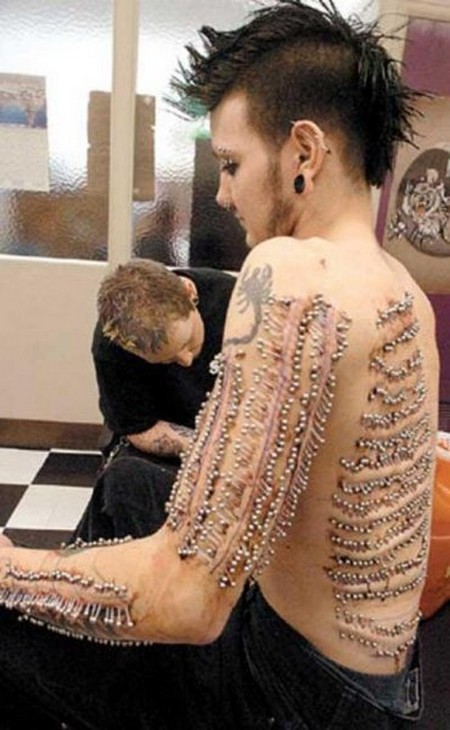
Before you decide to have a body piercing, you have to consider the risks. Infections, allergic reactions, nerve damage, teeth damage, and bleeding are just a few of the risks that surround body piercing. Infections are the most dangerous of all the risks. It can be caused by HIV, hepatitis, bacteria, tetanus, and yeast. If the piercer is careful, if he uses gloves and sterile equipment, the risk of infection may be lessened. However, infections are unpredictable, as long as the wound is not healed; the risk of infection still exists.

You should know that you may acquire and/or spread serious infections if the piercing equipment is not sterilized properly. Bacterial infections can still get you, even if the wound has already healed. So, you should always clean your body piercing, even if it has already healed. If the studio that you have chosen to have your body pierced uses piercing guns, get out immediately. Piercing guns cannot be sterilized and are supposed to be used for body piercings.

The most common areas of the body that is usually pierced are ear lobes, ear cartilage, eyebrow, nostrils, nasal septum, nasal bridge, tongue, lips, nipples, navel, and genitals. Each of these areas of the body have different risk factors because of their location and the time it takes to heal. The ear cartilage and navel, for example, takes the longest time to heal. Therefore, the ear lobe is less risky than the ear cartilage because it heals faster.

Labret piercing


It's mother & daughter.............

vertical navel piercing

vertical navel piercingnavel piercing barsnavel piercing dangersnavel ringstitanium navel piercing

Tuesday, December 1, 2009

Nose Piercings

Nose piercing is a custom which was prevalent in the Middle East and then taken to India by the Mughals in the 16th century. In the 1960s when the hippies made their way back from India, they brought back with them the custom of nose piercing more as a sign of rebellion against society than anything else.

There are three types of nose piercings: nostril piercing, nasal septum piercing and bridge piercing. In India, the nostril is usually pierced on the left side because, according to ayurveda, this helps eith easy childbirth and relieves pains during menstruation. Now, more and more people in the West want to experiment with piercing and nose piercing has become very trendy.

Nostril piercing is done by passing a needle through the tissue and replacing it with a piece of jewelry -- either a stud or a nose ring. Studs usually have a screw behind then to keep them in place. Septum piercing, though not as common, can be performed by puncturing the tissue inside of the nose, on the septum. Common jewelry for this sort of piercing includes rings, barbells, tusks or spikes. Most rare of all kinds of nose piercing is the bridge piercing, where the jewelry worn is usually barbells.

While selecting the jewelry for nose piercing, it is always better to keep the location of the piercing in mind and to select the jewelry which will fit well. Jewelry made of 14 or 18 carat gold, surgical steel, niobium or titanium is the best in the beginning while sterling silver jewelry is only advisable after the piercing has healed.

Nose piercing should never be performed by a piercing gun as it traumatizes the tissue and can cause infections like HIV. Utmost care has to be taken while the piercing is healing, which could take up to12 months. Never touch the piercing with dirty hands, keep it clean it with an antibacterial soap, and do not try to remove your jewelry before the piercing is healed unless absolutely necessary. These steps will help to safeguard a nose piercing from any dangers.

Tongue piercing